Heatwaves are how most people find out what condition their cooling system is really in. The temperature goes up, the humidity goes up, and a system that coped fine last September starts running all day and still cannot keep up. The good news is that most of that can be improved, and a good part of it costs nothing.
What thermostat setting actually saves you money?
Set your thermostat to 78 degrees F while you are at home, and raise it by 5 to 10 degrees when you are out. That is the setting most energy guidance lands on, and it works because the temperature difference between inside and outside is what drives the load on your equipment.
One common mistake is turning the thermostat down in the afternoon to try to cool the house faster. It does not work. The air conditioner removes heat at the same rate whatever you have set, so a lower setting just means it runs longer and costs you more. Set it, leave it, and stop thinking about it.
A thermostat with a schedule is worth having, because the real saving is the hours nobody is home. It is only worth having if the schedule is actually set to match your week. If you are considering a smart thermostat, the point is the schedule and the alerts, not the phone app.
Where is the heat coming in?
Before you blame the equipment, find out how much heat is arriving uninvited. In a Central Valley summer, the answer is usually a combination of the outside air, the sun and the ductwork losing what you have already paid to cool.
| Source of heat | What to do |
|---|---|
| Windows and doors | Weatherstrip and caulk the gaps, starting with the west-facing side of the house |
| Attic and roof | Check that the insulation is level and deep enough, and that it has not been pushed aside over the years |
| Ductwork | Seal and insulate it. Up to 30 percent of heated or cooled air can be lost through leaking ducts |
| Unused rooms | Close the doors and close the vents in rooms you are not cooling |
| Sun through glass | Blinds, curtains or reflective film, closed from late morning through the middle of the afternoon |
The duct row is the one most people skip, and it is the one that matters most in this climate. A central system can lose up to 30 percent of the air it pushes through leaking or damaged ducts, so the unit is working harder and delivering less. Sealing and insulating ductwork is a job we do, and it is a lot cheaper than replacing a system that is being asked to do too much.
Keep the filters and coils clean
A restricted filter is the most common reason a system works harder than it should. Check your filter every month through the hot months and replace it when it looks dirty. A dirty filter starves the evaporator coil, and a starved coil cannot move heat, and a system that cannot move heat runs all day and never catches up.
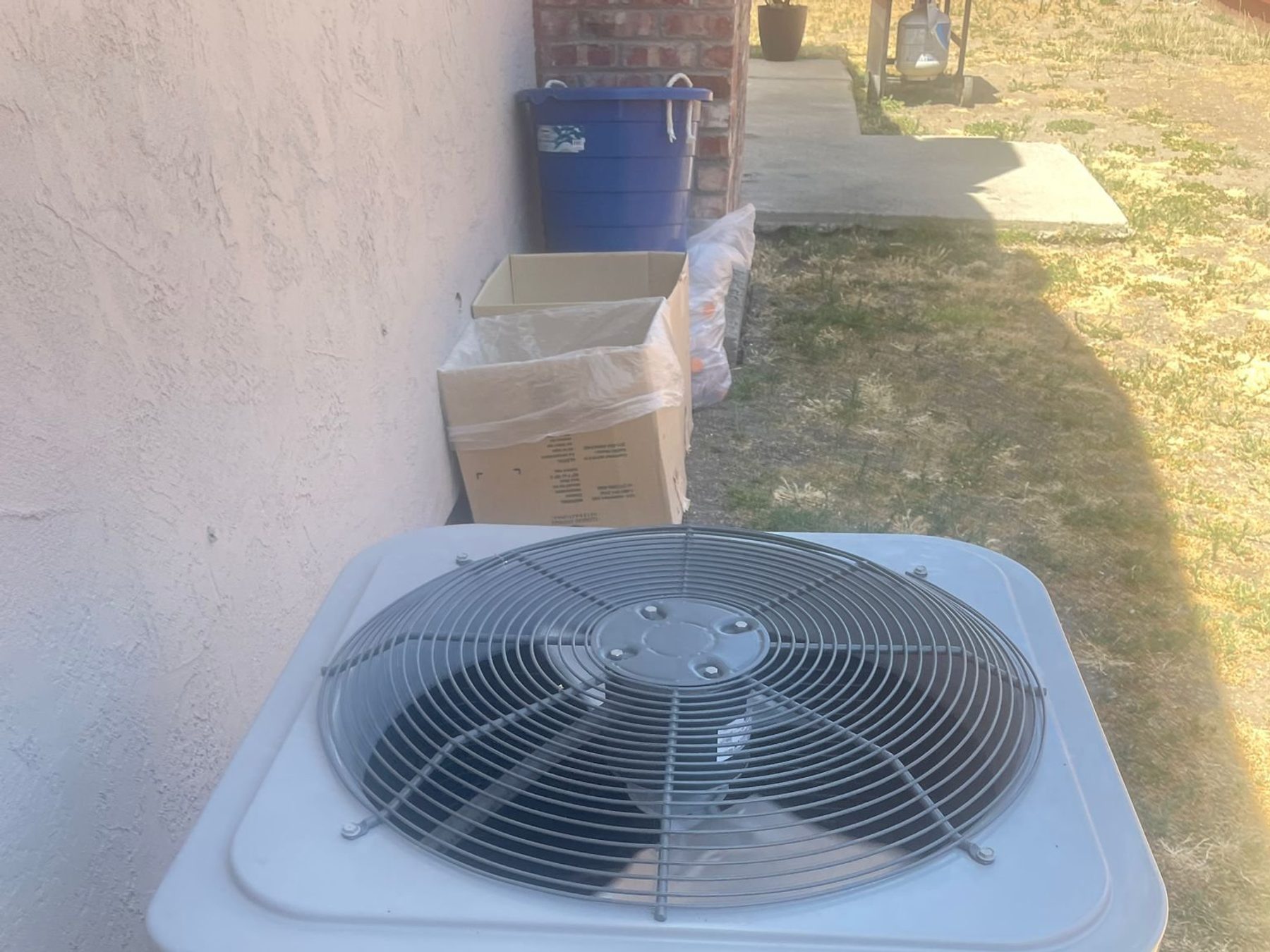
The coils need the same attention. The outdoor condenser coil is where the system dumps the heat from your house, and it is sitting in the dust and pollen that blow across the Central Valley in spring. A layer of debris on that coil insulates it, and the compressor has to work harder to push the heat out. The indoor evaporator coil needs a clean filter blowing across it, and if it has picked up dust or has a slime on it, it needs to be serviced.
Both of those are on our ten step maintenance checklist, along with the condensate drains. A drain that blocks in July puts water on the floor and can grow the kind of mould nobody wants in a house.
Let fans and shades do some of the work
A ceiling fan does not cool the air. It moves air across your skin, and moving air over skin makes you feel cooler, so you can raise the thermostat a couple of degrees without feeling it. That saves the system real work. In summer, set the fan to spin high and push air down along the ceiling so the warm air stays up where it does less harm.
Shades do the same job for the sun. Close the blinds or curtains on the south and west facing windows from late morning until the middle of the afternoon. The glass in a west facing window in July is a radiator, and the cheapest way to stop it heating your house is to put something between it and the room.
Two more habits pay off during a heatwave. Closing the doors between rooms stops the cool air spreading into rooms you are not using, which is the indoor version of closing a vent. And running the dishwasher and the oven in the evening rather than at midday keeps a surprising amount of heat out of the house at the time it matters most.
Get the system checked before the next heatwave
This is the step that protects you, and it is the one that costs money. A system that has been sitting since last October deserves a proper look before the first 105 degree week, because that is when every technician in the Central Valley is booked.
Here is what a full service covers, and it is the same ten step checklist we work through on every maintenance visit.
- Air filters examined and replaced
- The exterior condenser unit cleaned
- The evaporator and condenser coils serviced
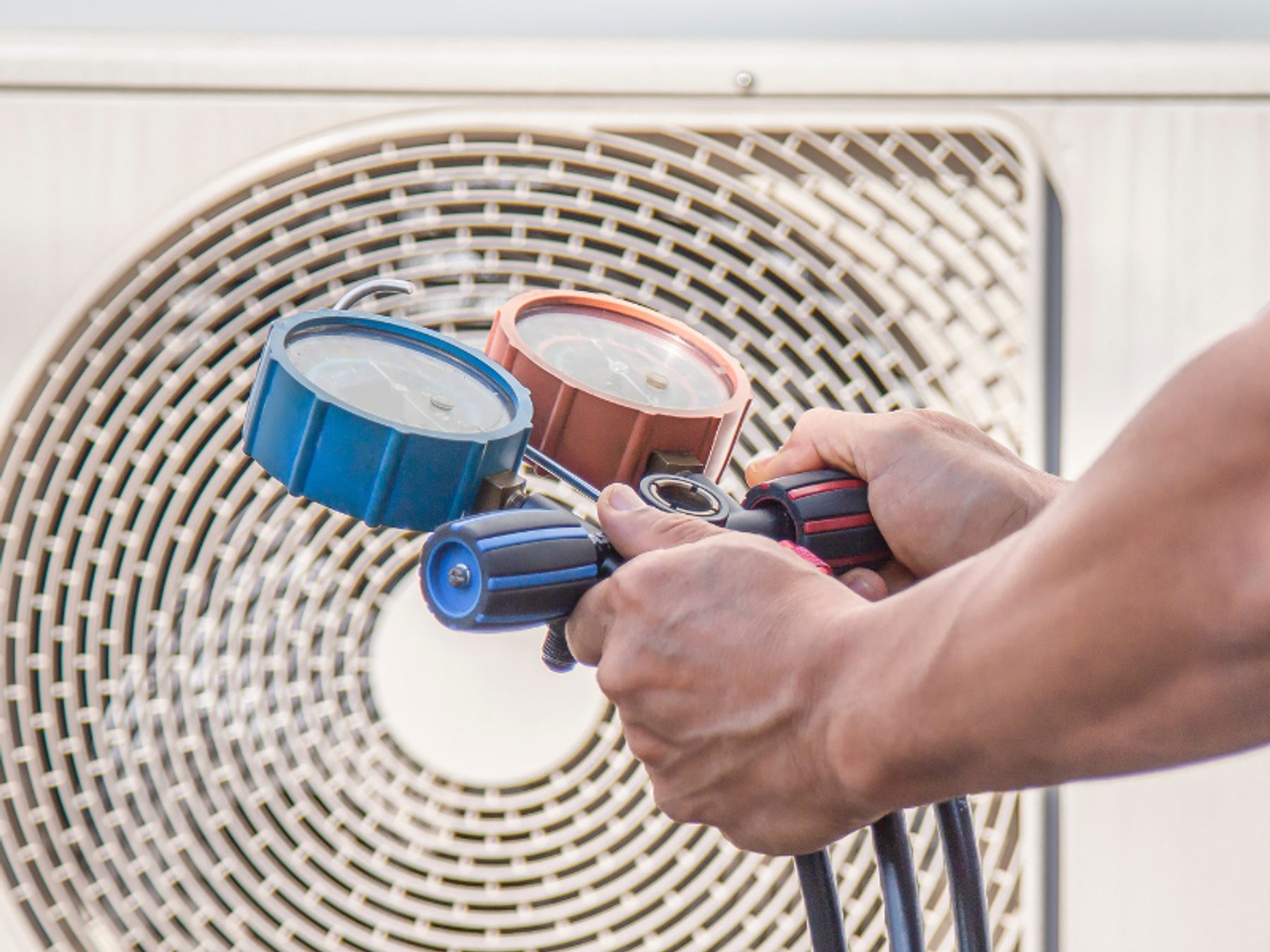
- Refrigerant quantities verified
- Electrical connections inspected
- Ductwork and air vents checked
- Thermostat function tested
- Condensate drain pipes cleared
- Fan and blower performance measured
- A full professional inspection with the findings written down
Most systems benefit from professional maintenance at least once or twice a year, and commercial systems should be serviced twice a year. We will tell you the price before we start, and you will get the findings in writing afterwards.
When to stop and call a licensed technician
Some of this is do-it-yourself work. Some of it is not, and the difference is safety.
- Stop if the outdoor unit is not running at all when the thermostat is calling for cooling. That is an electrical or control fault and it is a technician job
- Stop if the system runs and the house stays warm. The refrigerant and the compressor are the likely cause, and neither is a home project
- Stop if the breaker trips more than once. A repeated trip is a sign of a short, and it needs to be found
- Stop if you can hear hissing near the lines or see oil on the tubing
- Stop if there is water pooling under the indoor unit or blowing out of the vents
- Stop if you are tempted to open a line set or vent the refrigerant to make a repair easier
Call (209) 351-6000 and describe what you are seeing. We will tell you honestly whether it is a same-day job, a next-day slot, or something you can safely do yourself.