Every trade builds its own shorthand, and HVAC people talk in initials that mean nothing to a homeowner until somebody starts using them on an invoice. Two of those initials cause more confusion than the rest: HVAC and HVACR.
They sound almost identical and get used almost interchangeably, and they describe two related but genuinely different jobs. Here is what each one covers, what sits inside your walls, and why the refrigerant change happening right now makes the licensing question more important than it used to be.
What does HVAC stand for?
Three letters, three separate pieces of work that usually live inside the same system.
- Heating. Warm air in winter. On most homes this is a gas furnace, an electric furnace or a heat pump. It also covers boilers, unit heaters and the ductwork that carries the heat to the rooms.
- Ventilation. Moving fresh air in and stale air out, and controlling moisture, filtration and the balance between them. This covers outdoor air intakes, return grilles, exhaust fans, and equipment such as ERVs that bring outdoor air in without losing the heat you paid for.
- Air conditioning. Cooling and dehumidifying. Air conditioners work by moving heat from inside your house to outside it, using refrigerant that changes from a liquid to a gas and back again inside sealed lines.
A technician who does HVAC repairs and services all three, and installs new equipment for all three.
So what does HVACR add?
The letter R stands for refrigeration. In the trade, HVACR covers the full skill set: heating, ventilation, air conditioning and refrigeration. Refrigeration, in this sense, is cooling equipment that removes heat from somewhere other than a room you live in.
| Aspect | HVAC | HVACR |
|---|---|---|
| Stands for | Heating, ventilation and air conditioning | HVAC plus refrigeration |
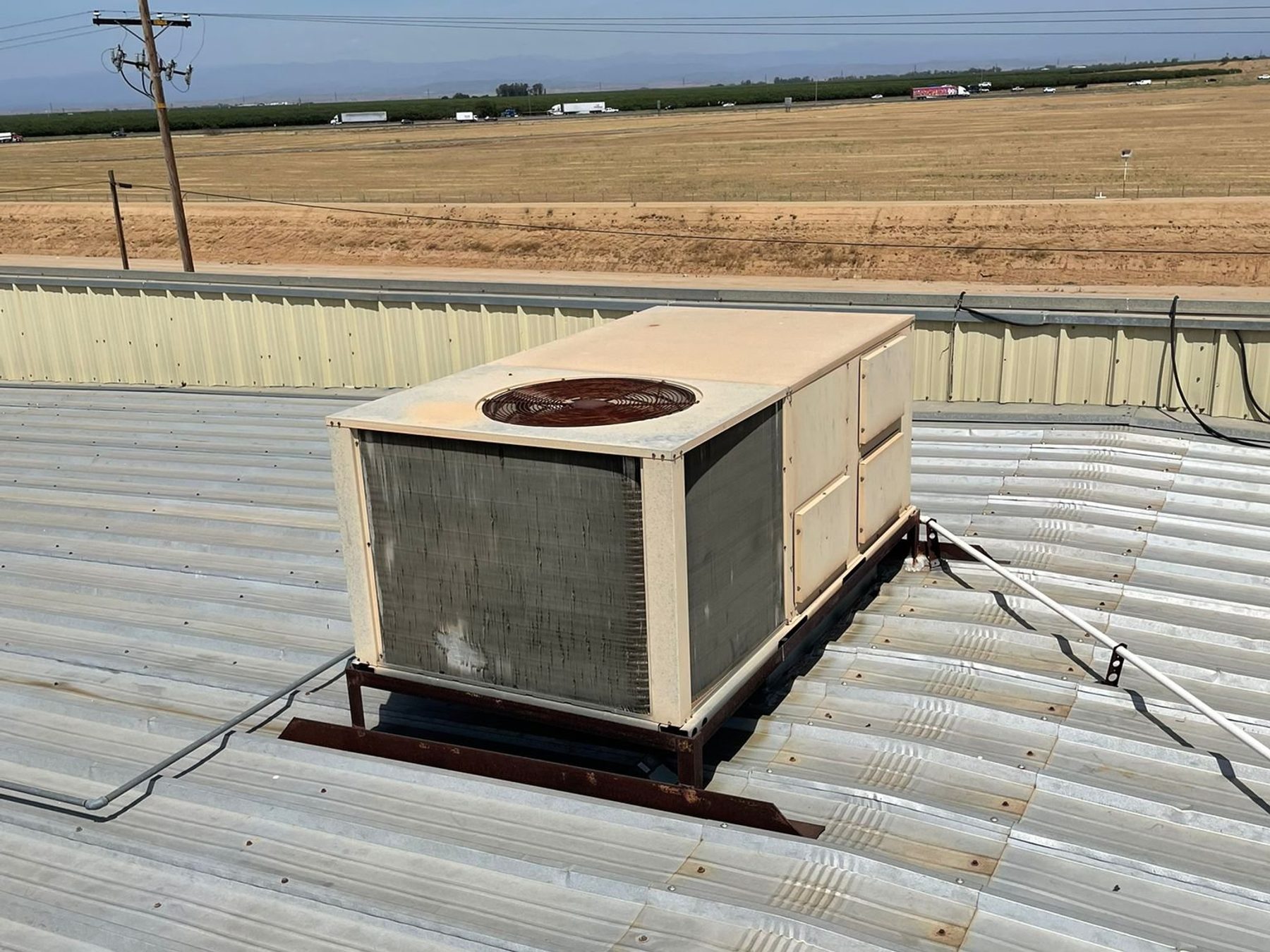
| Typical equipment | Furnaces, heat pumps, air conditioners, ductwork, mini-splits, rooftop units, VRF systems | All of that, plus walk-in coolers, reach-in cases, ice machines, display cases and chillers |
| Where the cold goes | Comfort cooling for the people in the building | Process cooling to keep food or product at a set temperature |
| Licensing in California | Covered by the warm-air heating, ventilating and air conditioning contractor classification | Commercial refrigeration sits under a separate refrigeration classification |
| Where we work | This is our trade | Not a service we sell |
That last row matters, so we will say it plainly. We are an HVAC contractor. We do not sell commercial refrigeration. We do not service walk-in coolers, restaurant cases, ice machines or chillers, and we will not quote that work. In California it is a separate licence classification for a reason: the pressures, the controls and the food safety rules are different from anything in a house. We would rather tell you that than take on work we are not trained and licensed for.
What is actually inside a residential HVAC system?
Most homes have a split system. One box outside, one box inside, lines and wires between them, and a duct network underneath or in the attic carrying the air to the rooms. Here is every part you are paying for.
| Part | What it does | Where you will find it |
|---|---|---|
| Thermostat | Tells the system what temperature you want and when to get there | On a wall, usually in a main living area |
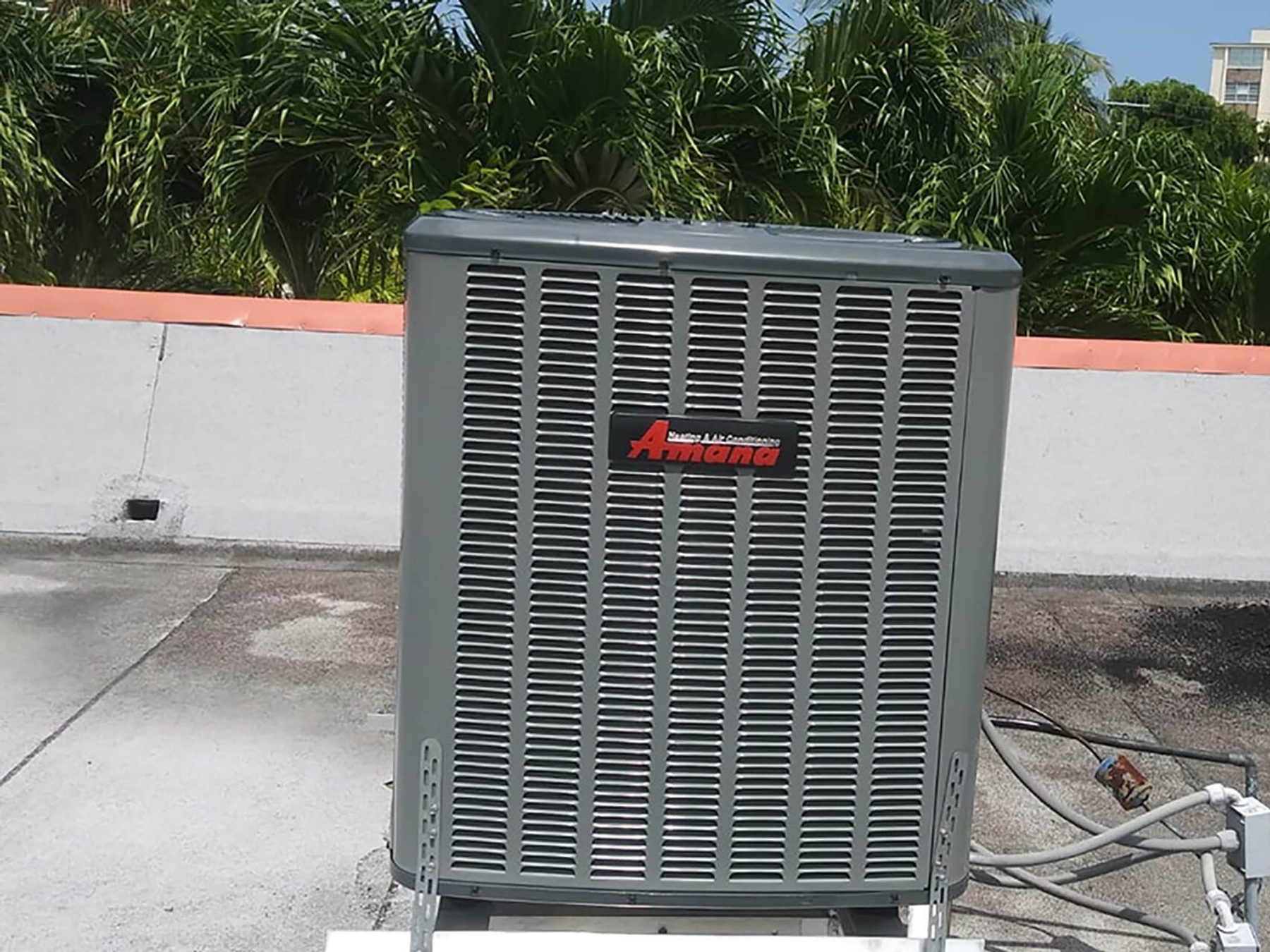
| Condenser unit | Holds the compressor, the condenser coil and the outdoor fan, and rejects heat outdoors | Outside, on a pad or a wall |
| Compressor | The pump that circulates refrigerant around the loop | Inside the condenser unit |
| Condenser coil | Sheds heat to the outdoor air so the refrigerant can condense back to a liquid | Outside, as fins or a coil on the unit |
| Condenser fan | Moves air across the condenser coil | On top of the outdoor unit |
| Evaporator coil | Absorbs heat and moisture from the indoor air | Inside the indoor unit or furnace cabinet |
| Blower motor and fan | Pushes air through the coil and into the ducts | Inside the indoor unit or furnace cabinet |
| Air filter | Traps dust before the air reaches the coil | In a rack or slot at the indoor unit |
| Refrigerant lines | Carry refrigerant between the indoor and outdoor units | Through a wall, attic or crawl space |
| Service valves and filter drier | Let a technician isolate, evacuate and charge the system safely | At the outdoor unit |
| Condensate drain pan and line | Collect the water that forms on the evaporator coil and carry it out | Under the indoor unit, running outside |
| Furnace and heat exchanger | Burns gas or uses electric heat, and transfers that heat to the air moving through the cabinet | A utility closet, garage or attic |
| Burner, igniter and inducer blower | Light the gas and pull the combustion gases out through the flue | Inside the furnace |
| Heat pump parts | A reversing valve that flips the refrigerant flow, plus a defrost cycle and often backup heat | Inside the outdoor unit |
| Ductwork | Supply and return ducts, plenums, registers, returns and flexible runs | Attics, crawl spaces, walls and under floors |
| Electrical parts | The disconnect switch, the breaker, the contactor, capacitors, the control board and the low voltage wiring | Beside the outdoor unit and inside the furnace cabinet |
Three of those parts cause most of the problems we see. The refrigerant lines are the only place a system can lose its working fluid, the condensate line clogs with algae and sludge, and the ductwork is where a lot of comfort problems come from.
Why the R-454B and A2L change makes certification matter
From 1 January 2025, A2L refrigerants became mandatory for new residential equipment. R-454B is the A2L blend used in most new systems, replacing the R-410A that filled earlier systems. Two things follow, and both affect you.
The first is that A2L is mildly flammable. It is not a hazard in a properly installed and serviced system, but it burns differently from R-410A, so it has to be handled with the right procedures and equipment. A technician trained on older systems has to be trained and equipped for the new ones.
The second is that R-454B is not a drop in replacement for R-410A. You cannot take a system running R-410A, add R-454B and carry on. The pressures, the oil and the temperature relationships are different, and refrigerant has to be recovered and handled properly.
Legally, refrigerant handling requires certification. That is not a grey area and it is not optional, which is why refrigerant work always belongs to a certified technician and never to a weekend DIY video.
If your system still holds R-22 or R-410A, refrigerant is limited and priced accordingly. If you are replacing, the new system will be on R-454B, and that is the system the next technician on your house will be trained on.
What to ask when a technician comes out
Whatever the age of the equipment, these are the questions that tell you whether the person in front of you understands the system.
- What refrigerant is this system using, and why does that matter here? It should be on the data plate. If they cannot read it, they are guessing.
- Is the fault in the refrigerant, the air moving, or the controls? Those three cover most problems, and each has a different fix and a different price.
- Has a Manual J load calculation been done before any new equipment is sized? A system too large for the house will short cycle no matter how new it is.
- What is being checked on the ductwork? If the answer is nothing, new equipment will not fix uneven cooling.
- Is the work covered, and for how long? Parts and labour are separate lines and both should be in writing.
When to stop and call a licensed technician
Understanding the parts makes it easier to see where the line is.
- Any work that opens a refrigerant line, recovers refrigerant or measures a charge.
- Any work on a gas appliance, including a furnace that will not ignite or a burner that will not stay lit.
- Anything inside the electrical disconnect or the breaker panel beyond resetting a breaker.
- Any work on the compressor, the blower motor, the control board or the heat exchanger.
- Any system you are about to fill with a new refrigerant, which is not a top up job and never should be treated as one.
- Carbon monoxide alarms, a smell of gas, or a hissing sound near the unit. Leave the house and call for help rather than adjusting anything.
RB HVAC Inc. is a licensed HVAC contractor based in Stockton, California, licensed under number 1094161, serving Stockton, Sacramento, Modesto and surrounding communities. We work on residential and commercial HVAC, including rooftop units, ductless mini-splits and VRF systems.