
Two households on the same street, with homes of a similar size, can be quoted very different amounts for a new heating and cooling system, and both quotes can be entirely legitimate. The difference is usually not quality. It is size, efficiency, the condition of the ductwork, the electrical work the house needs and how easy the equipment is to reach.
We do not publish prices, so this guide sets out the things that decide your quote instead. Read it before you ask anyone for a number and you will be able to tell a properly built quote from a thin one.
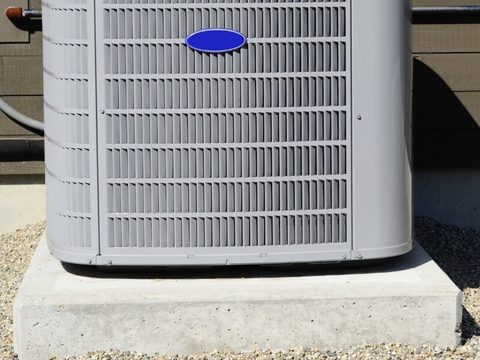
Why two quotes for the same kind of house can differ
The first thing to understand is that residential HVAC installation cost is not one thing. It is a stack of decisions, each one made by somebody, and the quote is the sum of them. A contractor who sizes the equipment by rule of thumb and a contractor who runs a load calculation are starting from different places. A contractor who assumes the existing ductwork is fine and one who measures it are working from different facts.
None of that makes either quote dishonest. It means the two quotes are describing two different projects. When you compare them you are not comparing two prices for the same thing, you are comparing two scopes, and the job is to work out what is actually in each one.
The factors that set the price
Six factors account for nearly all of the difference between one replacement quote and another. They are the same six in almost every home, and they are the six we work through before we put a number in writing.
| Factor | What we check | Why it moves the price |
|---|---|---|
| System size | A Manual J load calculation for the house, not a rule of thumb based on square footage | The equipment, the refrigerant lines, the labour and the electrical work all scale with the size |
| Efficiency rating | SEER2 for cooling and HSPF2 for heating, and how the indoor and outdoor halves are matched | Higher ratings cost more to buy and change what the system does year after year |
| Ductwork | Whether the existing runs can carry the airflow the new system needs, measured rather than assumed | New or rebuilt runs are additional scope, and they can limit the size the system can be |
| Electrical | The service, the panel, the disconnect, and whether a new circuit is needed | A new circuit, a sub-panel or a service change is separate licensed work |
| Access and install location | Roof, side yard, attic, ground level, and what has to be moved to get there | Labour follows the access, and a unit on a roof is a different job from one on a pad |
| Brand and efficiency tier | The make and model on the quote, and how the equipment is matched inside and out | This is the choice with the widest spread in it, and it is largely yours to make |
Financing, rebates and discounts sit on top of that stack rather than inside it. Financing is available on qualifying credit, and we handle California TECH Clean California rebate paperwork for you. None of them change what your house needs, and a financing decision should never change the size of the system.
We quote the exact price in writing before anything is ordered, and provide free phone consultations for installation guidance.
How to compare two quotes properly
Put both quotes side by side and compare the scope, not the total. A total on its own tells you very little, because two identical totals can describe two completely different purchases. These are the eight questions worth asking of every quote you are holding.
- Compare the equipment, not the total. Look at the make, the model and the efficiency rating on each line. Two quotes can total the same and specify different hardware.
- Check the tonnage and how it was calculated. A quote with no load calculation behind the size is a guess, and a guess is the most expensive kind of quote.
- Look for the ductwork scope. If it says nothing, the existing runs are being reused. Ask whether that is right for your ducts, given their age and condition.
- Look for the electrical scope. If a new circuit or a sub-panel is needed, one quote may include it and the other may not.
- Check access and removal. If the old unit is on a roof, or has to come out of a tight space, that work should be visible in the quote rather than discovered on the day.
- Read the warranty on both. Parts coverage and labour coverage, and the length of each. Ours is 10 year manufacturer parts coverage plus 1 to 5 years of labour on a replacement, and 5 years on an installation.
- Check the permit and inspection are included. They are part of the job, not something left for you to arrange afterwards.
- Ask each contractor the same question. The answers you get to a question you had not thought to ask are usually the most informative part of the comparison.
What a low quote is often missing
A quote that comes in noticeably below the others is not automatically a better deal. More often it is describing a smaller job. These are the items that quietly disappear from the bottom of a low quote.
- The load calculation. Sizing by square footage gets a system that is either short on capacity or long on run time, and both of those cost you money for years afterwards.
- Duct sealing and testing. New equipment on leaking ducts performs like old equipment on leaking ducts, because the air never arrives where it is supposed to.
- The refrigerant lines and connections. Reusing old lines is sometimes fine and sometimes not, and it needs to be a decision on the quote rather than an accident on the day.
- The electrical work. A new circuit, a sub-panel or a service upgrade is sometimes treated as an extra to be added later.
- Removal and disposal. Taking the old unit out, recovering the refrigerant and disposing of the equipment are all real work and they belong on the quote.
- The condensate drain. A new drain line or a new drain pan, where the old one is not reusable.
- The commissioning. A system that is installed but never started, run and checked in every mode is not a finished installation, and the fault shows up later, when you are least able to deal with it.
How to get a written quote
Call us and we come out and look at the system and the house. We provide a free phone consultation for installation guidance, and an in-home evaluation before ordering so the work is planned with complete clarity. We look at the existing equipment, the ductwork, the electrical service and the space the unit would occupy. Then we size the job with a Manual J load calculation rather than a rule of thumb.
What you get back is a written quote with the equipment by make and model, the tonnage and the load calculation behind it, the refrigerant type, the ductwork scope, the electrical scope, the permit and inspection, the warranty terms and the total with any additions already in it. It is a fixed document. Nothing gets added once the job has started.
If another company has already quoted you, bring that quote with you. We will look at what it covers, run our own load calculation and tell you plainly whether the replacement is needed. If it is not, we will say so.
When to call a technician
Buying a system is a research job with a purchase at the end of it. Some things are not research at all, and those need a licensed HVAC technician the same day.
- Your system has stopped, is leaking water, is making a grinding noise or has a burning smell.
- A gas appliance is involved. Combustion, venting and carbon monoxide checks need a licensed technician.
- You are being asked for payment in full before any work starts, with no written scope attached.
- You are asked to sign a replacement quote with no load calculation behind the size, and nobody will explain where the tonnage came from.
- Any work that opens the refrigerant circuit, the electrical panel, a gas line or a wall. In California the refrigerant work legally requires a certified technician.
RB HVAC Inc. is a licensed HVAC contractor based in Stockton, licensed in California under number 1094161. We have served the Central Valley since 2010 across Stockton, Sacramento, Modesto and surrounding areas. Upfront pricing is agreed in writing before any work starts, transparent diagnostics guide every recommendation, flexible financing is available for all credit scores, and our workmanship is guaranteed.