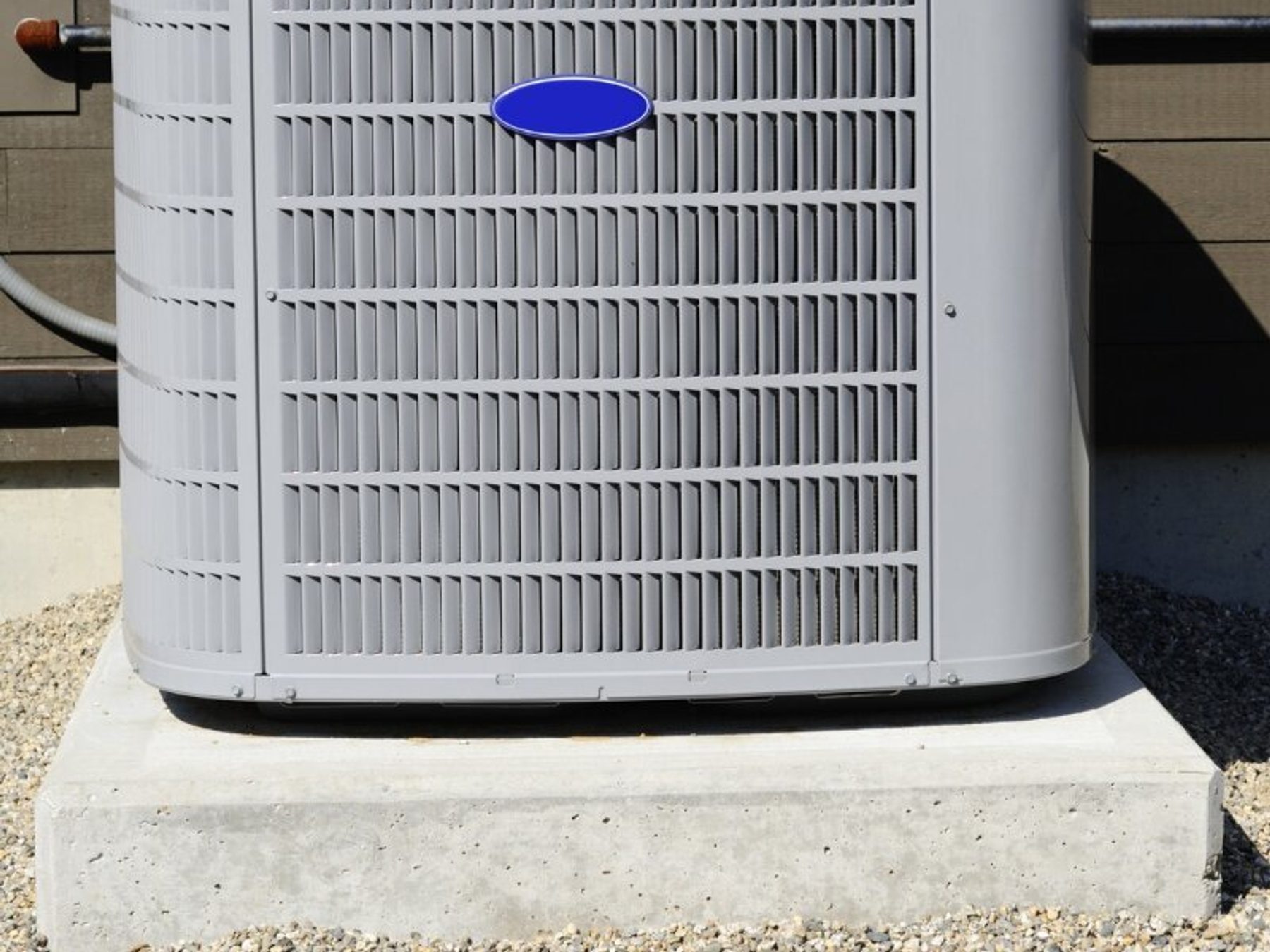
Choosing a heating and cooling system in California is not difficult because the options are limited. It is difficult because there are five good answers and they suit different houses. The Central Valley is not the coast and it is not the mountains, so most of the advice written for California as a whole does not apply cleanly. Here is how each option stacks up for a house around Stockton, Sacramento and Modesto.
Do you need ductless mini-split heat pumps?
A mini-split has an outdoor condensing unit and one or more indoor heads, with no ductwork between them. Most ductless equipment is a heat pump, so it heats as well as cools, and each head is controlled on its own.
It suits a home that has no usable ductwork, a room that never cools, a converted garage, a home office you use three months a year, or a household where people want different temperatures in different rooms. It also suits an older house where the alternative is running new ductwork through a finished ceiling.
On cost, a ductless system is quoted per indoor head rather than at a flat rate, so a four-head system is priced differently from a single-head system. It also avoids the ductwork scope that comes with a central job. The trade-off is that each head is visible on a wall or in a ceiling.
Do you need high-efficiency central air and a heat pump?
Central air is one outdoor unit, one air handler and a duct network. The efficiency ratings to look at are SEER2 for cooling and HSPF2 for heating, which replaced the older ratings and measure performance across a wider range of outdoor temperatures. That matters here, because the range between a mild September afternoon and a July afternoon is enormous.
It suits a larger home that already has sound ductwork, and a house where one thermostat for the whole floor is what you actually want. It is also the route most California replacements take now, because the energy code treats a heat pump as the default option for new equipment, and a heat pump handles both heating and cooling from one outdoor unit.
This is the option most California replacements take. What sets the price is the size of the system, which runs from 2 to 5 tons, whether it is an air conditioner or a heat pump, the efficiency rating you choose, whether the existing ductwork can carry the new equipment, the electrical work the house needs and how accessible the install location is. Ductwork adds scope when the runs need rebuilding. On a replacement we provide 10 years of manufacturer parts coverage plus 1 to 5 years of labour from us, with a 5-year warranty on the installation.
Do you need variable-speed equipment?
A single-stage compressor is either on or off. A two-stage or variable-speed compressor steps its output up and down to match what the house actually needs, which means it runs for longer at lower power instead of cycling on and off at full power.
It suits a house that has hot afternoons and mild evenings, which describes most of the year here. The practical benefits are a smaller temperature swing, less noise at night, and less time spent at full power, which is where the running cost is. It also reduces the starts and stops that wear out a compressor.
The trade-off is price, and it is only worth having if the unit is sized correctly. An oversized variable-speed system will still short cycle, so this decision comes after the load calculation, not before it.
Are geothermal heat pumps worth it in California?
A geothermal system pumps heat between the building and the ground, using a buried loop of pipes. It is the most efficient way of heating and cooling a house that the industry has, and it runs on electricity like a conventional heat pump rather than burning gas.
It suits a homeowner who is building new, who has the yard space and the budget for the loop, and who intends to stay in the house for a long time.
It does not suit most Central Valley homes. The drilling or trenching is the largest single cost and the largest single risk, and the savings come mostly off your heating bill, which is not where a Stockton household spends its energy money. We will look at your site and give you an honest answer, including when the answer is that it is not worth it.
Do you need smart thermostats and zoned control?
These are two different upgrades that are often sold as one. A smart thermostat learns your routine, runs a schedule you can change from your phone and tells you when the system is not behaving. Zoned control splits the house into areas with their own dampers and their own control, so the bedroom can be warmer than the living room.
A smart thermostat suits almost any household and it is now expected on a new compliant installation. Zoned control suits a house with more than one floor, a house with a room that is always a different temperature, or a household where people disagree about what the house should be set to.
Zoning is not free. It needs dampers in the ductwork and a control panel with more than one zone, and both of those are extra line items on the quote. If the ducts in your house are old and unconditioned, the dampers and the trunk line they need can add more than the thermostat costs.
How the choice gets made, and what it costs
Every one of these systems starts with the same step. We run a Manual J load calculation, which works out how much heat your home actually gains on the worst day of the year, based on size, glazing, orientation, insulation and duct losses. The result gives us the capacity, and the capacity tells us which of the five options is sensible.
- We measure the house rather than guessing, with a Manual J load calculation
- We check the ductwork, because it decides whether central air is even a realistic option
- We look at how the rooms are used and at the hours the house is occupied
- We compare the options against your budget, with the price written down before anything is ordered
- We put the recommendation in writing, including what the work involves and what the warranty covers
| System | Best suited to | What drives the price |
|---|---|---|
| Ductless mini-split heat pumps | Homes without usable ducts, and rooms used part of the time | Quoted per indoor head, and no ductwork scope |
| High-efficiency central air and heat pump | Larger homes with sound existing ductwork | System size, efficiency rating, ductwork scope, electrical work and install access |
| Variable-speed equipment | Homes with big swings between day and night | A price step up from single-stage equipment of the same size |
| Geothermal heat pumps | New builds with yard space and a long-term owner | The highest upfront cost, driven by the ground loop |
| Smart thermostat and zoning | Most homes for the thermostat, split floors for the zoning | Zoning adds dampers, a control panel and duct modifications |
Financing is available on qualifying credit, there is a military discount on a new system installation for active and veteran service members, and we help you with California TECH Clean California rebate paperwork. We are a licensed contractor, not a utility, and we will tell you plainly what you qualify for.
When to stop and call a licensed technician
- Stop if you are tempted to buy equipment before anything has been measured. Sizing is not a detail, it is the whole job
- Stop if the quote does not mention a load calculation or a permit
- Stop if you are considering moving a unit, running a line set or opening a refrigerant line yourself
- Stop if you want a ductless system added to a house with central air and nobody has looked at how the two will work together
- Stop if the price is being decided by a badge or a brand name rather than by the house it is going into
Call (209) 351-6000 and tell us what the house looks like and how you use it. We offer a free phone consultation for installation guidance, provide upfront written pricing before work begins, and tell you honestly which of these systems suits your home best.