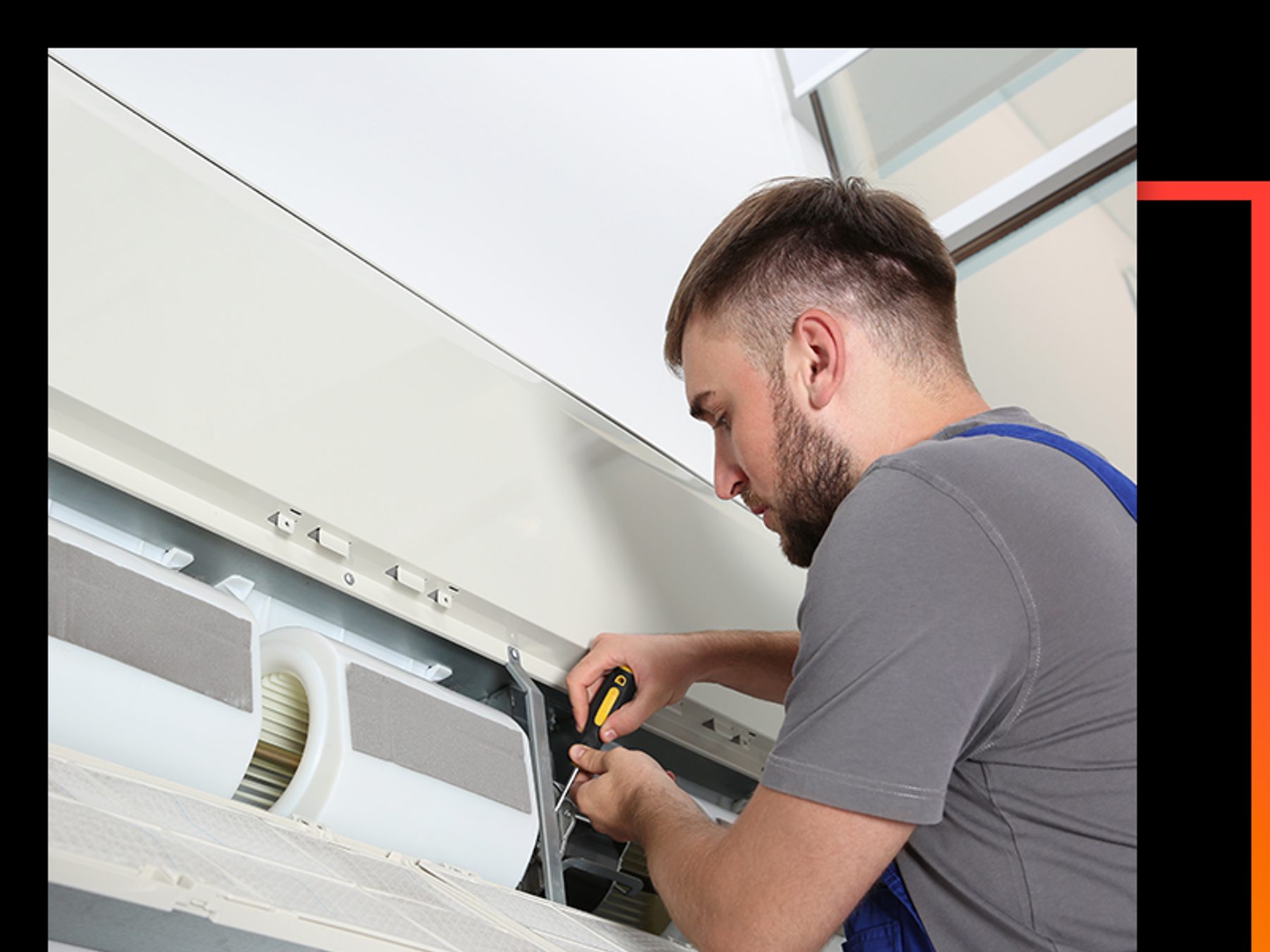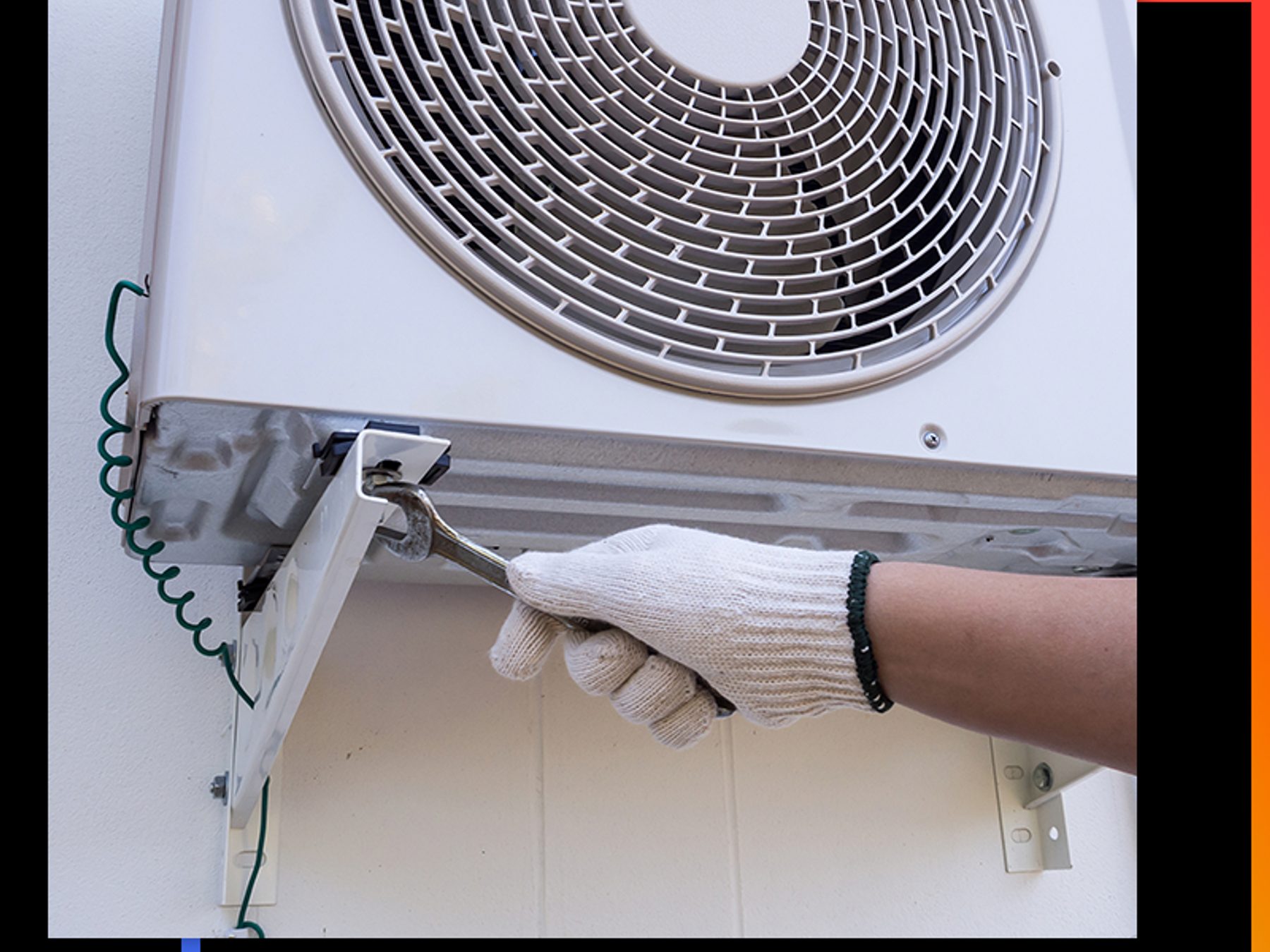
It is Saturday afternoon. The temperature outside is past 105 degrees and rising, the house was cool an hour ago, and now the vents are blowing nothing but warm air. Nothing about this is pleasant, and the instinct to go outside and look at the outdoor unit is understandable.
Here is the order to do things in. Some of it you can do safely tonight, some of it will make the repair more expensive, and a few things need to be settled before a technician arrives.
What to do in the first fifteen minutes
- Turn the thermostat to cool and set it below the current room temperature. If the system has not been asked to do anything, that is the first thing it needs.
- Check the mode on the thermostat. Some systems are left on heat, or on fan, and a stuck heat mode in July is a common and free fix.
- Look at the air filter. If it is packed, dusty or bent, the airflow is restricted and many systems will shut down rather than freeze the coil.
- Check the circuit breaker for the outdoor unit. If it has tripped, switch it off fully, wait a moment, and switch it back on once. If it trips again, leave it off and call.
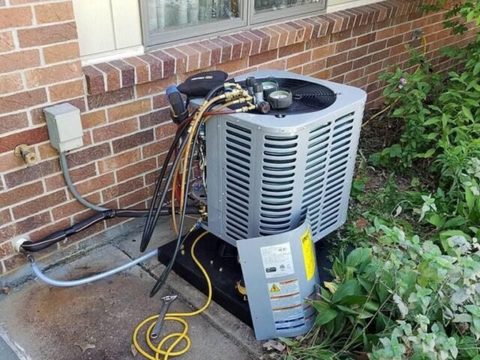
- Look at the outdoor unit from a safe distance. Is the fan turning? Is there a thick carpet of cottonwood or leaves pulled against the coil? Is the unit covered by a blanket or a tarp from the winter?
- Check for a smell or a sound you do not recognise. Burning, hot plastic, hissing or grinding changes what you do next.
What the symptom usually tells you
Most breakdowns fall into one of these patterns, and the pattern narrows down what is wrong before anybody opens a tool bag.
| What you see | Usual cause | Safe first step |
|---|---|---|
| Nothing happens at all, no fan sound | Breaker, thermostat, or a failed capacitor | Check the mode, then the breaker, then call |
| Outdoor fan turns, no cool air | Low refrigerant, dirty evaporator coil, or a stuck reversing valve | Change the filter, then call for the coil |
| Air is warm, and the unit cycles on and off quickly | Low airflow, so the coil is freezing | Clear the filter and the outdoor unit |
| Water dripping from the indoor unit | Blocked or disconnected condensate drain | Do not let it overflow the pan, call for the drain |
| A loud grinding or rattling noise | Fan or motor bearing | Turn the system off and call |
| Water pooling outside by the outdoor unit | Normal condensation on a hot day, or a blocked drain | Look closely, and call if it is more than a puddle |
What not to do tonight
These are the moves that turn a small repair into a large one, and they are tempting because they are the only ones you can do without a technician.
- Do not keep resetting the breaker. A breaker that trips again immediately means there is a fault, and each reset puts stress on the compressor. Turn it off and call.
- Do not add refrigerant. It is illegal for anyone but a certified technician to handle it, a system that needs refrigerant has a leak, and topping it up without finding the leak just empties your wallet.
- Do not leave the system running when it is not cooling. You are paying for every minute, and a short cycling system can freeze the coil, which turns a small job into a coil replacement.
- Do not cover the outdoor unit with a blanket or a tarp. It blocks the airflow the unit needs to shed heat, and on a hot night it can cook the compressor.
- Do not open the electrical panel beyond flipping a breaker. Anything inside that panel is a live conductor, and the service disconnect at the outdoor unit is the safe place to cut power.
- Do not pour water on the outdoor unit. You risk an electrical fault and you risk thermal shock to the coil.
Keeping the house safe while you wait
Once the system is off, the house starts to heat up, and in a Central Valley afternoon that happens quickly. There is more you can do about it than you might think.
Close the blinds and curtains, especially on the west side, and stop the sun doing the work for the house. Use the ceiling fans, which move air across your skin and make a room feel cooler without adding any heat to it. Run the refrigerator and freezer with the doors shut. If you have a bathroom exhaust fan, run it, because moving air out of the house helps the walls and furniture give up some of their stored heat.
Drink water, and do not use the oven or the stove to cook. If the house passes 90 degrees and stays there, and there are children, older residents, small pets or anyone with a breathing problem in the house, treat it as a genuine emergency. Get them to a cooler place, whether that is another house, a public library, a community centre or a cooling centre, and do not wait for the air conditioner to be fixed first.
What to say when you call
Five minutes of clear description saves a lot of guessing on arrival. Tell us these things.
- What the system is doing. Nothing, fan only, or running with warm air.
- When it stopped, and whether it was working normally before that.
- What you have already checked, and what you have already changed.
- Any noise, smell, water or error message on the thermostat or the unit.
- The make and model on the nameplate, if you can read it safely from the ground.
- How many people and animals are in the house, and what the temperature is reading inside right now.
When you call (209) 351-6000, we will tell you straight away when a technician can reach you, and we will put the price in writing before any work starts. We also have an on-time promise: we arrive in the window you pick, or the service call is free.
How to stop it happening again
Weekend breakdowns in July are usually the visible end of something that started months earlier. A filter that was never changed, a drain that packed with algae, a coil that was never cleaned, or a system that has not been looked at since it was installed.
Most systems benefit from professional maintenance at least once or twice a year, and the spring visit is the one that matters because it happens before the heat. The list is the same every time: filters, the exterior condenser unit, the evaporator and condenser coils, refrigerant quantities, electrical connections, ductwork and vents, the thermostat, the condensate drain pipes, fan and blower performance, and a full inspection at the end. Work through that in April and July is a lot quieter.
When to stop and call a licensed technician
Some of this is a job for tonight and some of it is a job for a professional. Put the tools down and call a licensed HVAC technician if you hit any of these.
- The breaker trips again as soon as you reset it, or you find scorch marks, heat or a buzzing sound on a panel.
- You smell burning, hot plastic or hot electrical insulation anywhere near the equipment.
- You see ice on the refrigerant lines while the weather is warm, or a line that is oily, stained, corroded or dented.
- You hear grinding, squealing or a scraping sound from the outdoor unit.
- Water is coming out of the unit rather than out of the drain line, or the drain line backs up every time the system runs.
- You are considering opening a refrigerant line, replacing a capacitor, working inside the panel or dismantling the blower cabinet.
- The house is above 90 degrees and staying there, and there is nobody in it who is safe in the heat.
RB HVAC Inc. is a licensed HVAC contractor based in Stockton, licensed in California under number 1094161, serving Stockton, Sacramento, Modesto and surrounding communities. Call us, tell us what the system is doing, and we will take it from there.