The trouble is that by the time a sound is worth a call, it has usually been going for months. Knowing which noises are harmless saves a lot of guessing.
The nine sounds worth knowing
| The sound | What it usually is | What to do |
|---|---|---|
| Rattling or knocking from the unit | A loose access panel, a motor mount, or a disconnected duct | Stop and call, a rattle has moved once |
| A squeal or squeak at start up | A failing blower motor bearing, or a slipping belt | Call if it continues once the fan is up to speed |
| Grinding | A bearing starting to fail, or a fan touching its housing | Stop the system and call the same day |
| Hissing or gurgling | Refrigerant escaping a line, or a flooded line set | Do not touch the lines, call for a leak check |
| Clicking at start up | A contactor chattering, or a capacitor that is failing | Note the pattern and call |
| Buzzing | The fan motor, or a loose electrical connection | Turn the system off and call |
| Knocking in the ductwork | Metal ductwork expanding and contracting | Usually harmless, mention it when we come |
| Popping or crackling from the outdoor unit | Ice on the outdoor coil melting as the heat pump defrosts | Let it clear, call if it keeps coming back |
| Scraping | The fan blade hitting the fan cage | Stop the system and call |
Sounds from the fan and the motor
Rattling and knocking from the cabinet
A rattle that comes and goes with the fan is usually a loose access panel or a motor mount. A knock that follows the air down the run is a duct question. Something has moved and it can move again.
A squeal at start up
A squeal in the first second or two that stops once the fan is up to speed is usually a belt slipping. A squeal that continues after the fan is spinning up is a bearing in the blower motor starting to go. A bearing that keeps running will seize the motor, and that is a much bigger job than a belt.
Grinding, scraping and buzzing
Grinding is a bearing wearing out, and it is worse than a squeal. Scraping is a fan blade touching the cage, often something in the way such as a leaf. A buzz with the fan is the motor or a loose connection.
Sounds from the refrigerant and the electrical side
Hissing and gurgling
Hissing close to the outdoor unit is refrigerant escaping a line, and it needs a leak check and a measured charge before anybody touches the lines. Gurgling in the line set means refrigerant has backed up.
Clicking at start up
One click and the system runs is the contactor closing, and that is normal. A string of clicks that repeats for a few seconds and then stops is a contactor chattering, or a failing capacitor. A capacitor will not fix itself.
Sounds from the ductwork and the outdoor unit
Knocking in the ductwork
Metal ductwork expands as it heats up and contracts as it cools, so a knock as the system starts and stops is usually the panels moving against each other. A knock all day is not expansion.
Popping and crackling from the outdoor unit
On a heat pump the outdoor coil collects ice and then defrosts to get rid of it. The popping and crackling is the ice letting go. If the unit keeps frosting over every day, that is a defrost fault, not normal ice.
Four things to note before you call
- Note whether the noise follows the fan or the compressor. Put your hand near the vent and listen. A noise that comes and goes with the air at the register points at the blower, one that starts with the compressor points at the outdoor unit.
- Note when it happens. At start up, at shut down, only when the system is cooling, or only in the rain. Humid weather brings out noises you could not hear when it was dry.
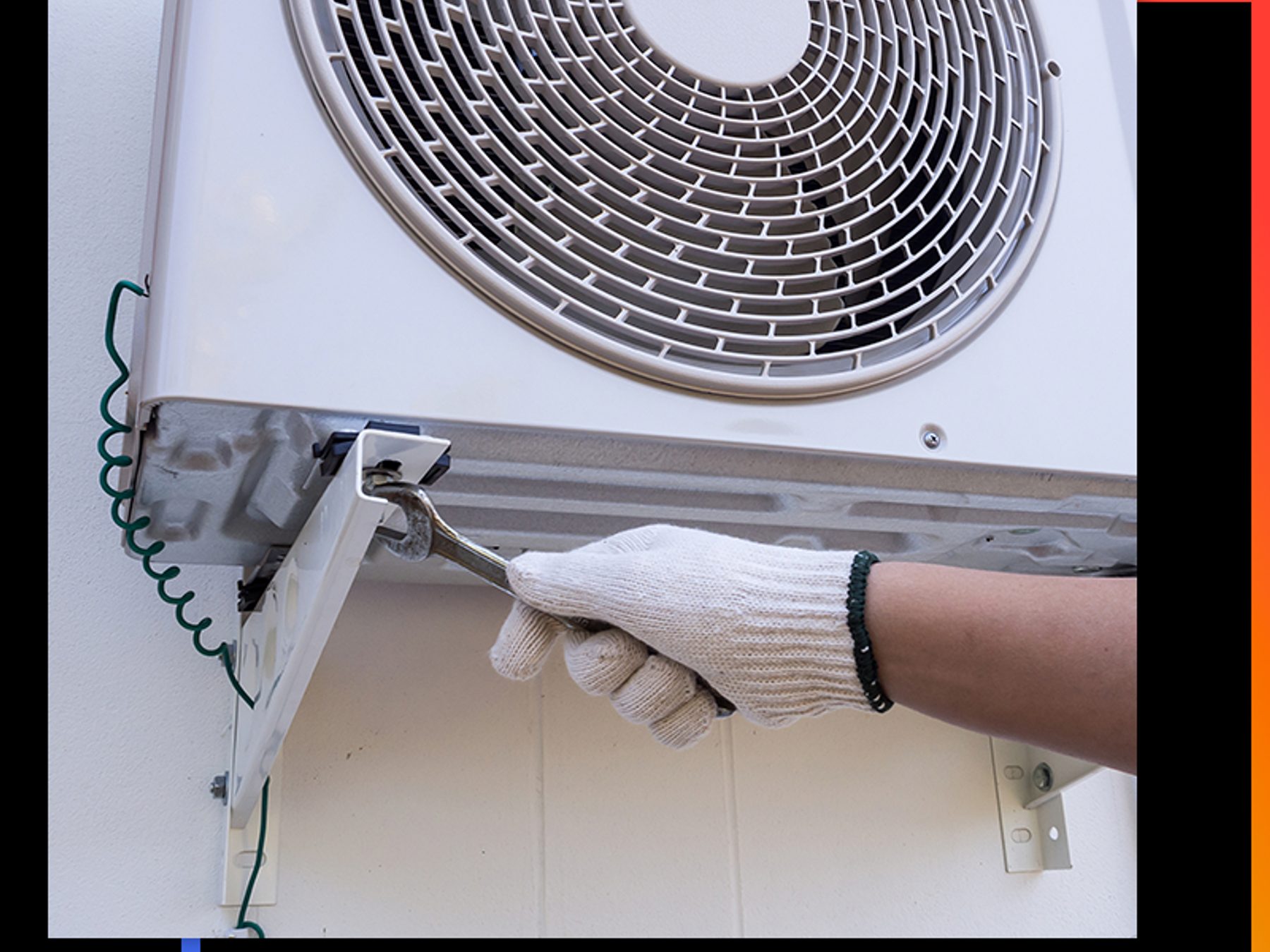
- Check whether a panel has worked loose. A rattle you can feel standing next to the cabinet, or a panel sitting proud of it, is a panel that has moved. Push it home if you want to.
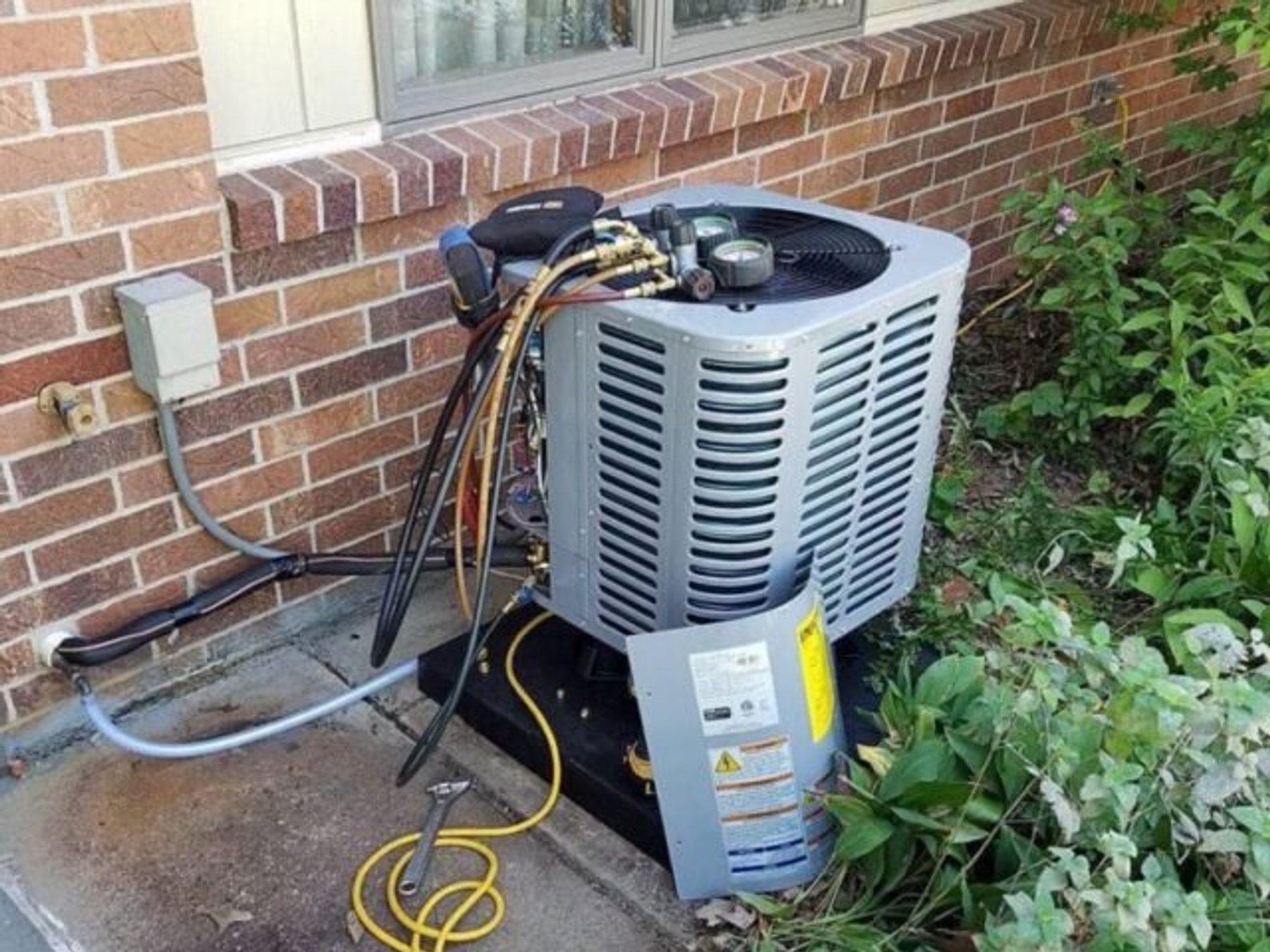
- Check whether something is touching the fan blades. Look at the outdoor fan from a safe distance with the system off. A leaf or a stick caught in the cage will scrape every time the fan comes round.
When to stop and call
A squeal that continues after the fan spins up, a sudden change in the sound, or a noise with a burning smell means stop and call. A bearing that keeps running will seize the motor, and that is a much bigger job than a belt.
- Stop if the sound changes suddenly, or gets louder over a few days
- Stop if there is a burning smell or hot plastic near the unit
- Stop if the squeal carries on once the fan is up to speed
- Stop if you hear hissing near the refrigerant lines
Do not open the outdoor unit or the service disconnect beside it, do not touch the refrigerant lines, and do not pull the panels off the indoor unit. A noise is not the fault, it is the symptom, and finding it means gauges, a meter and trained hands.
Every sound a system makes is a part telling you something. The cheap noises are the ones you catch early: a belt, a loose panel, a dirty filter. The expensive noise is the one that ran for two more seasons.
What happens when we come out
We listen to the system running before we touch anything, then start it up and shut it down to see whether the noise comes with the fan, with the compressor, or with neither. We check the blower and its mount, the belt, the contactor, the capacitor and the connections. The fault is written down and the price agreed in writing before any work starts.
The honest version
If you would rather have somebody look at it, our HVAC repair page explains how we handle a fault like this, and the symptom hub lists the rest of the symptoms we get called about, one at a time.
Most new noises on a system that has run for years come down to something small that got loose: a panel, a motor mount, a belt, a blocked filter. The ones that keep people up at night are the squeal that does not stop and the smell that appears with it. If the sound changed suddenly, or comes with a burning smell, do not run with it. Call (209) 351-6000 and tell us what the noise sounds like, when it happens, and whether it follows the fan or the compressor. RB HVAC Inc. holds California HVAC license number 1094161, and we quote the price in writing before any work starts.