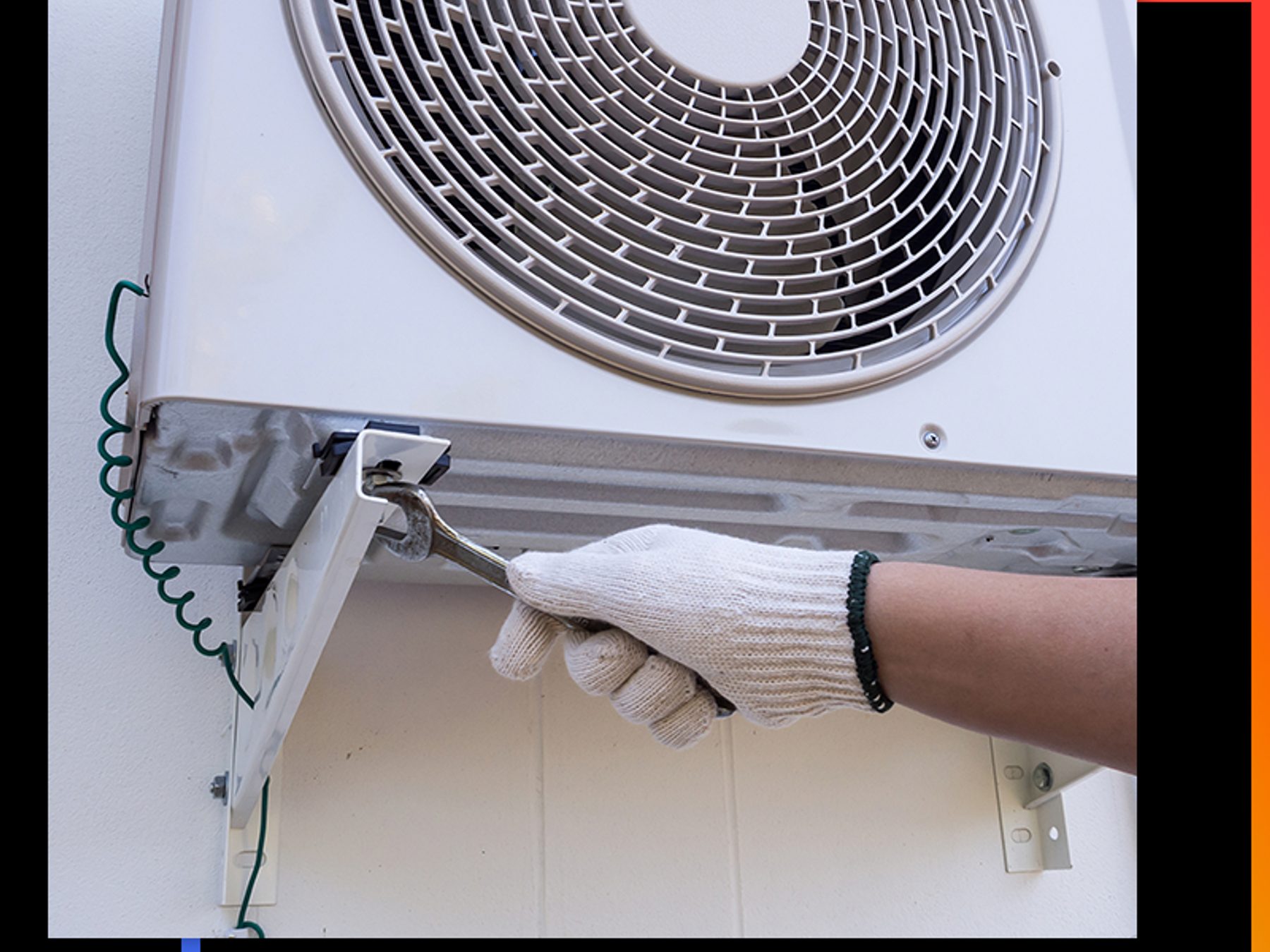
Air holds moisture. When refrigerant leaves the outdoor unit it is cold enough that any damp in the air pulls together on the metal and runs down the pipe to the ground. That is what you are looking at most of the time, and it happens on every properly working split system. It is not the unit leaking refrigerant, and it does not mean anything has broken.
It is also one of the most common reasons homeowners call us, because from the patio you cannot always tell condensation from a fault. Here is how to sort the two out.

What is actually going on
Five causes cover almost every call we take on this symptom, listed in the order they are worth thinking about.
- The unit is not level, so the water runs to one corner of the base and pools there
- The condensate drain is blocked, so the water has nowhere else to go
- A refrigerant line fitting is weeping, which is a leak and not condensation
- The outdoor fan has stopped, so the coil runs colder than it should and sweats more than it should
- The coil itself is cracked, and the water is coming out of the cabinet rather than off the lines
Condensation and a leak do not look the same
Condensation is narrow. It falls from the refrigerant lines and lands in one small wet spot under or just beside the pipes, and it dries out when the unit is off. A leak is wider. It spreads out from under the cabinet itself, it keeps the ground wet after the system has been switched off for an hour, and it leaves the concrete dark and stained. If the ground is wet and the lines above it are cold, you have condensation. If the ground is wet and the lines are not cold, you have something else.
A stopped fan is worth calling out on its own. When the fan is not moving air over the coil, the coil drops well below the temperature it should hold, the moisture on it has nowhere warm to go, and it sweats far more than a healthy unit would. The same is true of a coil that is badly scaled with dust. Both faults show up as more water than that pad has ever held before.
The five checks worth making before you call
All of these are things you can do with your eyes and the back of your hand, from the ground, without touching anything that belongs to a technician.
- Look at where the water is sitting. Condensation drips off the refrigerant lines and lands in a narrow wet spot under the pipes. A fault spreads out from under the cabinet, or it pools in one corner and creeps toward the house.
- Feel the lines with the back of your hand. Cold and wet is normal, that is the condensation working. Warm and wet is not normal. It usually means the refrigerant is not being pumped, so the line should be cold and is not.
- Look for oil marks and take a smell. Oil on the lines, or a sweet chemical smell near the cabinet, means refrigerant is escaping. That is a leak and it needs gauges, not a wet rag.
- Check the drain line where you can see it. The small plastic line running out of the base of the cabinet should be clear and dry where it leaves the unit. If it drips steadily into a puddle that never dries, the drain is blocked.
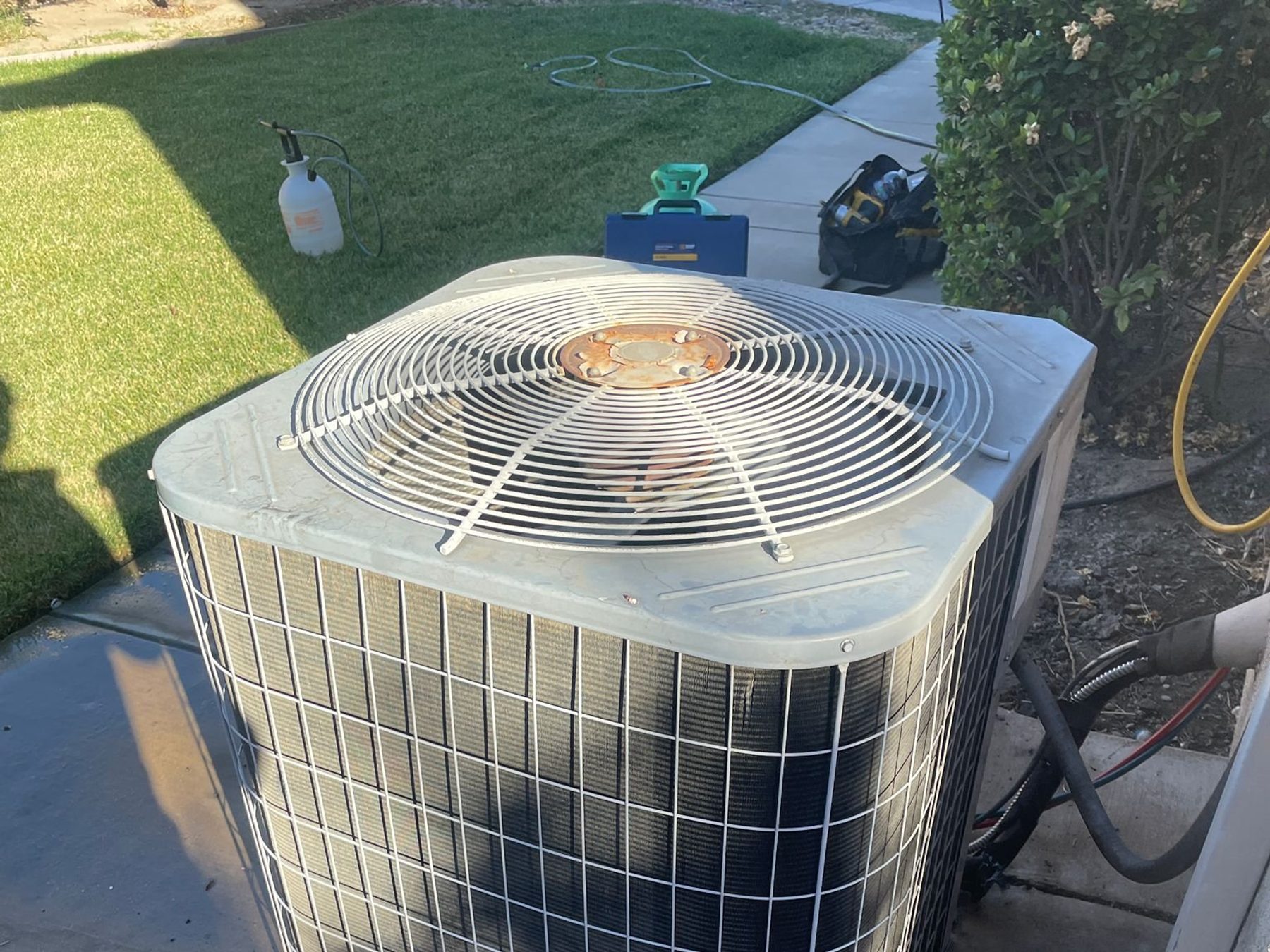
- Keep stored items away from the service disconnect. The outdoor unit is the part most people call the condenser unit, and the box beside it is the service disconnect. Leave both clear so nothing leans against them and you can see what is happening.
Where the line sits
There are four signs that mean stop and call a licensed technician instead of keeping an eye on the puddle.
- Water inside the house, running under a door or appearing under a window
- Water reaching the service disconnect or the electrical panel
- Oily water, oil marks on the lines, or a sweet chemical smell
- Standing water sitting in the base of the cabinet
A refrigerant leak is not homeowner work, and neither is anything involving wiring near water. Do not open the cabinet, do not open the line set, and do not touch the service disconnect. If you can reach the thermostat, switch the system off there first, then call us. We will tell you honestly whether it is a same-day job or something you can safely deal with yourself.
| Cause | What you see | Who can fix it |
|---|---|---|
| Normal condensation | A narrow wet spot under the lines, and the lines are cold to the touch | Nobody, leave it alone |
| Unit not level | Water pools in one corner of the base and creeps toward the house | Technician |
| Blocked condensate drain | A steady drip into a puddle that never dries, and water at the base | Technician |
| Leaking line set fitting | Oil marks on the lines, a sharp smell, water spreading from under the cabinet | Technician, with gauges |
| Outdoor fan has stopped | The coil is iced or sweating heavily, and the air from the unit is weak | Technician |
| Cracked coil | Water coming out of the cabinet itself, and the cabinet is wet inside | Technician |
Most of the time the puddle under the outdoor unit is the system working exactly as it should. If the water is spreading, oily, or reaching the wiring, it is not condensation, and that is a technician job rather than a weekend job.
What happens when we come out
We start by telling condensation from a leak, because that difference decides whether anything needs doing at all. Then we check the unit for level on its pad, trace the drain line for a blockage, look at the fan and the coil, and put gauges on the line set to read the charge. If it is a leak we find it and repair it, and if the unit has settled we set it back on level and re-pad it. If it is condensation, we will say so, and you can go back to your afternoon.
If you would rather have somebody look at it, our HVAC repair page explains how we handle a fault like this, and the symptom hub lists the rest of the symptoms we get called about, one at a time.
Call (209) 351-6000 and tell us where the water is sitting, whether the lines are cold, and whether you can see any oil. We will tell you honestly whether it is nothing at all or a fault worth fixing. RB HVAC Inc. holds California HVAC license number 1094161, and we quote the price in writing before any work starts.